Arbitrage system

Gold Spot–Futures Arbitrage EA

A two-market arbitrage Expert Advisor that monitors price relationships between related spot and futures markets. POLARIS currently applies this research to gold.

What is arbitrage?

Arbitrage means using a temporary imbalance between related markets. A simple example is the same asset being offered at different prices in two places. The trader buys the cheaper side and sells the more expensive side, aiming to benefit when the difference returns to a more normal level.

POLARIS applies this idea to spot gold and gold futures. We are not mainly trying to predict whether gold will rise or fall. We are watching the relationship between two prices.

The gold price gap

Spot and futures prices are not normally equal. A futures contract has an expiry date, so time, financing, carrying costs and market conditions create a natural difference. This difference is called the basis.

Years of observation allow us to estimate an expected basis and compare it with the live basis. If the live gap moves far enough away, the system checks whether the difference can be traded. Exact formulas, thresholds and filters are not published.

Expected basisObserved basis
Our approach Spot and futures prices are not normally equal. A futures contract has an expiry date, so time, financing, carrying costs and market conditions create a natural difference. This difference is called the basis. Temporary deviation
Time toward futures expiry

Market terminology reference: CME Group — The Role of Basis ↗

Why automation?

During active gold trading, the difference can change in seconds. Both markets must be watched continuously. Entry must happen in both at almost the same time, and exit must also be coordinated. A human can be too slow or may enter one side just before conditions change.

The system monitors the two markets, opens both legs and later closes both legs as one process. Automation does not guarantee a profit; it makes the required timing and consistency possible.

How the hedge helps

One position is long and the other is short. Because the two sides oppose each other, a strong one-way move in gold is not the main source of risk. This makes the approach less dependent on gold direction than a single buy or sell trade.

It is still not risk-free. Slippage, spread changes, latency, financing, contract details and unequal fills can affect the result.

What limits scale?

For larger accounts, the volume available at the best price can be limited. If the required size is greater than the available liquidity, part of the trade may be filled at worse prices and the expected profit may fall.

This is mainly a capacity issue rather than a new directional risk. We account for it when deciding how much capital the system can reasonably handle.

Historical test

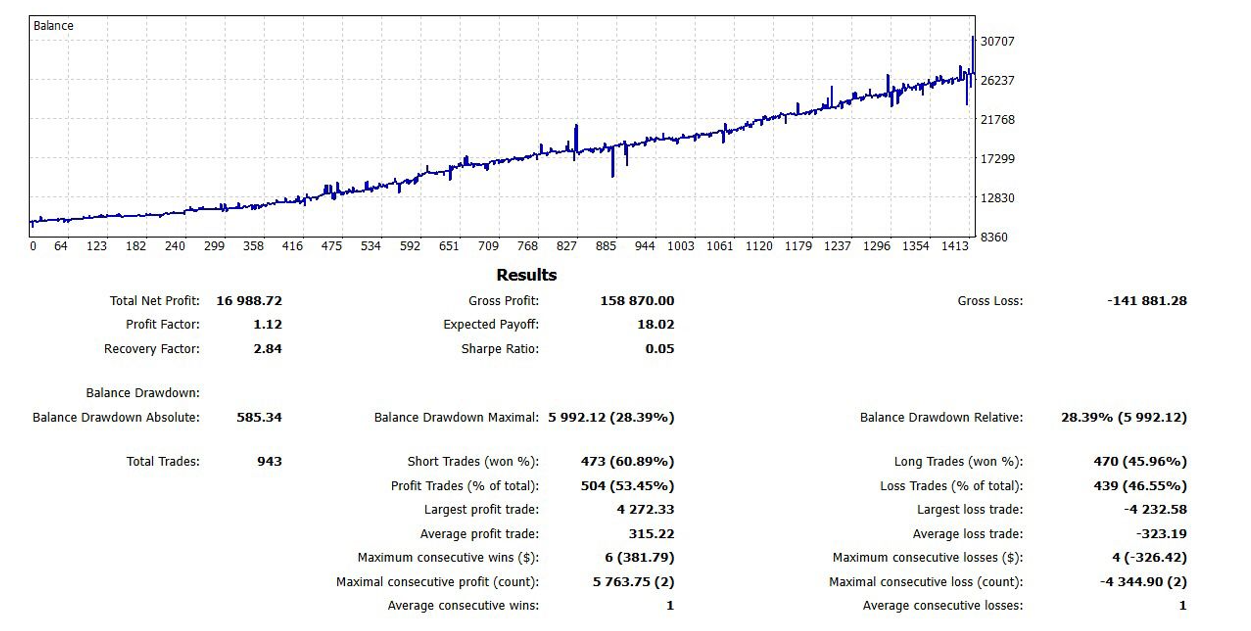
This is the original screenshot from a historical MetaTrader test. We show it as supporting evidence and keep it unchanged, without repeating its figures in promotional cards. It is a simulation, not live performance and not a promise of future results.

The screenshot does not state the test period, data source, broker, commissions or modelling settings. It should therefore be read as an early supporting document, not as complete verification.

Historical MetaTrader strategy-test balance curve and statistics supplied by POLARIS
Original historical test screenshot.View full image ↗

Live monitoring

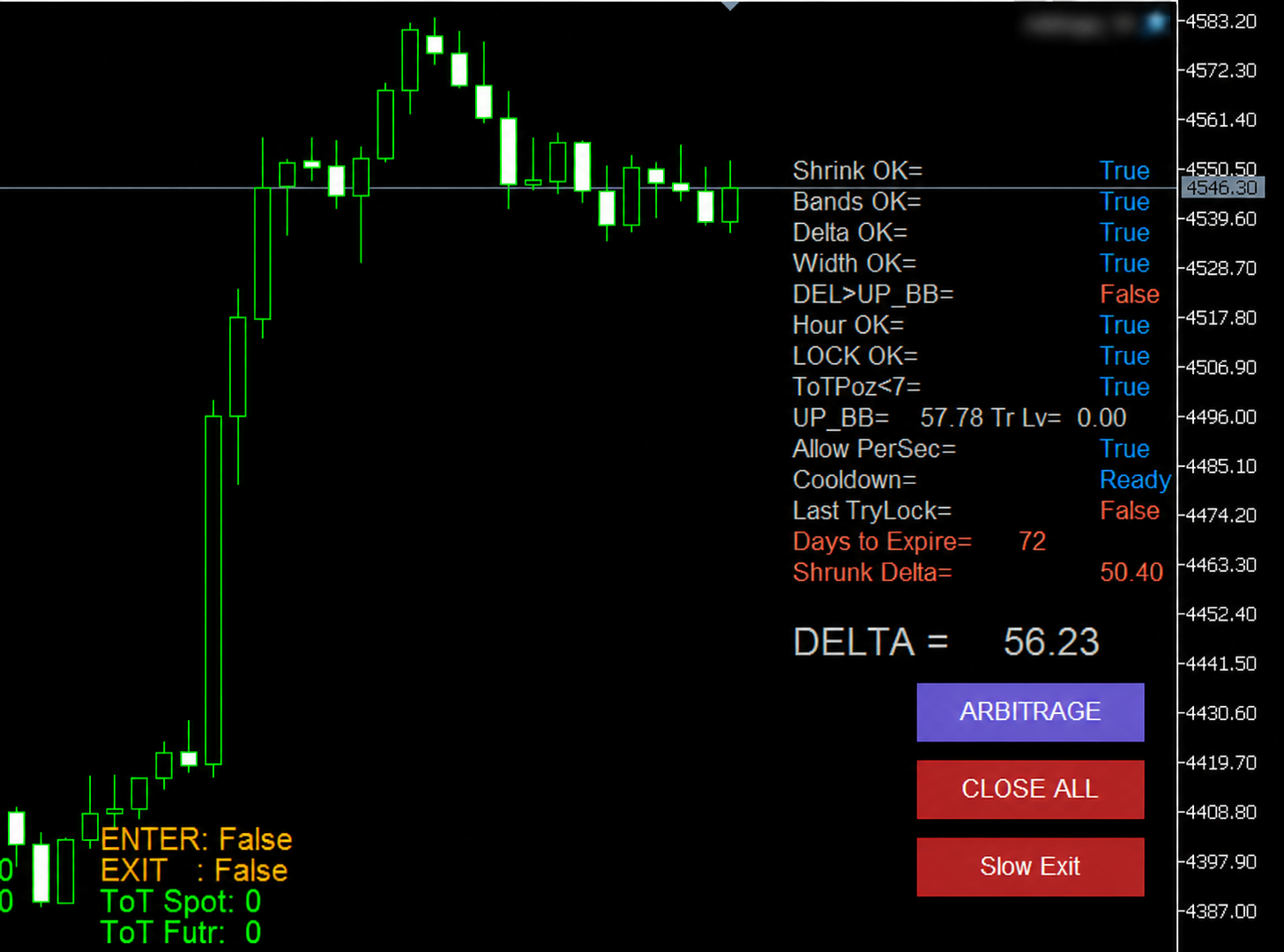
This screen shows the system while it monitors the market. It checks the current price gap, contract expiry, entry and exit conditions, and the state of both positions. The image gives a real view of the working process; the internal formulas and settings remain private.

POLARIS gold arbitrage monitoring interface on a live gold chart
The working monitor shown for process context.

Portfolio role

This system is not presented as a complete portfolio on its own. Every strategy works better in some market conditions and less well in others. POLARIS combines different systems so the portfolio does not depend on one method.

Within a portfolio, this arbitrage strategy can provide a return source that is less dependent on the outright direction of gold. Its allocation still depends on liquidity, execution quality, drawdown and its relationship with the other systems.

Questions

What is gold arbitrage?

Gold arbitrage evaluates a temporary price imbalance between related gold markets. This research focuses on spot gold and gold futures, where the basis must be compared with its changing expected relationship.

How does a gold arbitrage EA work?

It monitors both markets, evaluates the observed basis against an evolving reference, and coordinates two opposing legs when its conditions and execution controls permit action.

What is the gold spot–futures basis?

It is the price difference between a gold futures contract and spot gold. It changes with time to expiry, financing and carrying effects, and market conditions.

Does the strategy predict whether gold will rise or fall?

Not as its primary thesis. It focuses on the relationship between two related gold markets. Directional exposure may be reduced by the opposing legs, but it is not eliminated under every execution outcome.

Why can this not be handled reliably by a person?

The relationship must be monitored continuously and both legs must be entered and exited with very little delay. In volatile conditions, manual reaction can alter the spread before the second leg is completed.

Is arbitrage risk-free?

No. Execution, liquidity, spread, slippage, latency, financing, basis behaviour, contract details, and unmatched fills remain material risks.

Is this page selling the Expert Advisor?

No. This is a research and portfolio-component profile. It explains the idea, evidence, limitations, and possible portfolio role without publishing a product manual or checkout.
A research question or an engineering brief?

Questions about the design or the software specification are welcome. No account-management or portfolio-access offer is made here.

Ask about the research →
Contact POLARIS on WhatsApp