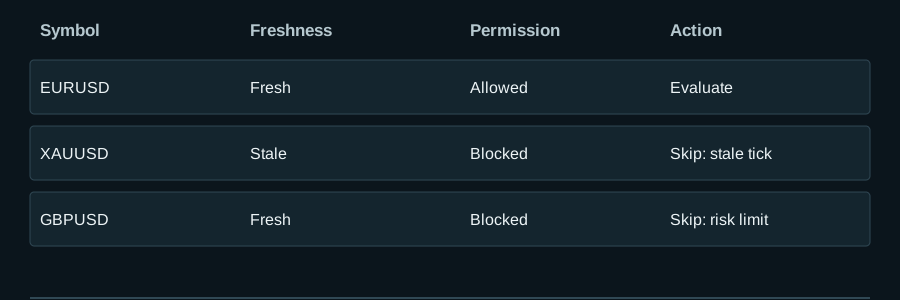
The shared starting point was a dashboard that ranked or highlighted opportunities across several symbols. A human could look at the table, ignore a stale row, interpret a colour change, and decide whether an alert still mattered. The requested EA had to make those judgments explicit.
This case combines multiple archive patterns and describes the engineering hand-off from observation to execution without exposing an original scanner, private formula, or client workflow.
From visual row to verified order
Ranking and display are separated from permission and execution.
- 01DetectCalculate the per-symbol condition from synchronized data and a defined bar state.
- 02QualifyAttach direction, strength, source time, expiry, and duplicate-event identity.
- 03PermitApply portfolio exposure, session, spread, position, and cooldown rules.
- 04ExecuteSend the request, verify the broker result, update state, and retain an audit trail.
Shared problem
The visual tool showed useful information but did not define when a colour first became a signal, whether the current candle was final, how long a row remained valid, or what happened when two symbols changed together. Those omissions were manageable for a human and unsafe for automatic execution.
Constraints
The EA had to work across symbols with different data readiness, sessions, point values, volume steps, stop distances, and spread conditions. It also had to avoid duplicate entries when the dashboard refreshed repeatedly and preserve state across terminal restarts.
Composite solution
The scanner was separated into calculation, event, ranking, and presentation layers. Execution consumed only a qualified event object with a source timestamp and expiry. A portfolio permission layer checked exposure and operating conditions before the order module acted and verified the final result.
Practical outcome
The dashboard remained useful for observation, while the EA used the same underlying states without reading colours or screen objects. Logs could explain why a visible opportunity was accepted, delayed, rejected, or expired.
Questions you may have
Can an EA read signals directly from dashboard objects?
It can, but a shared calculation interface is usually more reliable than treating colours, labels, or chart objects as the primary data contract.
Was this one scanner product?
No. It is a composite of recurring scanner, indicator, dashboard, and execution hand-off patterns.