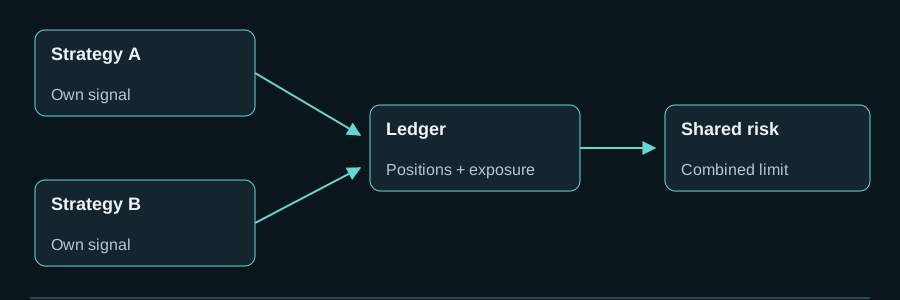
A trade manager is often introduced as a collection of convenient actions: calculate volume, place stops, move protection, close a basket, or pause trading. In a portfolio, those actions become infrastructure because several strategies may depend on the same account state and must not issue conflicting instructions.
The central engineering problem is authority. The manager needs to know which positions it may observe, which it may change, which limits apply across strategies, and what to do when the broker confirms a result different from the request.
One control path for many strategies
The manager rebuilds account truth before it grants or uses authority.
- 01ObserveRead confirmed positions, orders, account state, symbol rules, and execution conditions.
- 02AttributeMap every position to an owner, strategy group, and portfolio risk budget.
- 03DecideApply permissions and hard limits in one documented priority order.
- 04VerifyConfirm broker results, rebuild state, and record every intervention.
Ownership before action
Magic numbers alone are rarely a complete ownership model. Manual trades, copied positions, symbol suffixes, several EAs sharing a magic number, and netting accounts can all blur responsibility. A manager needs a declared scope: observe-only, strategy-specific, portfolio-wide, or emergency account authority. Actions outside that scope must remain impossible.
A shared risk budget
Per-trade limits do not reveal combined exposure. The manager should aggregate open risk by strategy, direction, symbol group, currency, and account. It must define how pending orders, correlated positions, floating loss, margin use, and already-requested operations affect remaining capacity.
State and priority
Daily stops, strategy pauses, basket exits, time rules, and emergency controls can trigger together. Their precedence must be explicit. State also has to survive restarts: the manager should reconstruct from confirmed platform data and persisted control state rather than trusting counters held only in memory.
Operational outcome
A mature manager gives every strategy the same answer to the same account condition. It reduces duplicated risk code, makes interventions auditable, and allows portfolio rules to evolve without rewriting each entry model.
- Define ownership and authority separately.
- Recalculate exposure from confirmed positions and orders.
- Use one priority table for normal, restricted, and emergency states.
- Verify every trade result before changing internal state.
- Log the measured condition, decision, request, and confirmed outcome.
Questions you may have
Should one manager control every EA?
Only when its ownership rules and authority are explicit. Some portfolios need a shared risk supervisor while strategy-specific exits remain inside each EA.
Can a trade manager guarantee a drawdown cap?
No. It can enforce intended actions, but gaps, slippage, outages, and rejected requests can move the realized result beyond a configured threshold.